· RIGHT ACCORD Private Duty–Home Health Care · 5 min read
Preventing Falls at Home: A Family Guide to Senior Safety
Learn practical ways to reduce fall risks for seniors at home. Tips for safer daily routines, bathroom safety, medication awareness, and when to consider extra help.
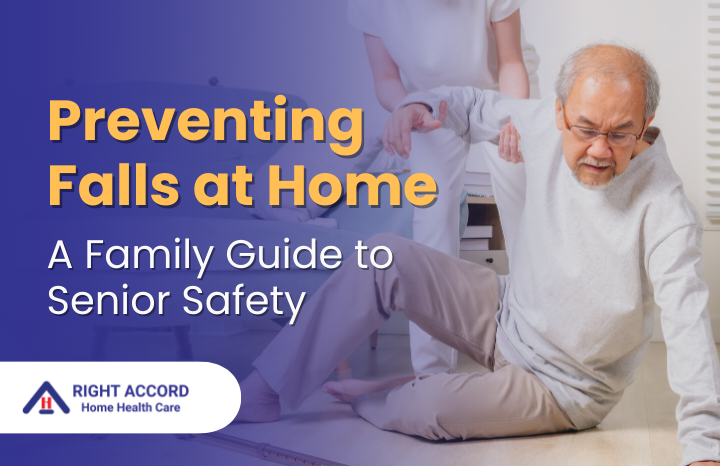
Falls are one of the most common safety concerns for seniors living at home. A single fall can lead to serious injury, loss of confidence, and long recovery times. For many families, fall risk becomes a constant worry as loved ones age.
The good news is that many falls can be prevented with awareness, small home adjustments, and the right level of daily support. Understanding what causes falls and how to reduce risk can help seniors remain safe, independent, and confident in their own homes.
This article explores practical ways families can help prevent falls at home and explains when additional support may be helpful.
Why Seniors Are at Higher Risk of Falling
As people age, natural changes in strength, balance, vision, and reaction time can increase fall risk. Chronic conditions such as arthritis, diabetes, or heart disease may affect mobility. Medications can also cause dizziness, fatigue, or confusion.
Everyday tasks that once felt simple, like getting out of bed, walking to the bathroom, or reaching for items, can become hazardous without support.
Even seniors who are generally active and healthy can experience unexpected falls, especially when the home environment is not adapted to changing needs.
Common Fall Hazards Inside the Home
Many fall risks exist in familiar spaces. Because seniors know their homes so well, hazards are often overlooked.
Common risks include poor lighting, loose rugs, cluttered walkways, slippery floors, uneven surfaces, and stairs without proper support. Bathrooms are especially dangerous due to wet surfaces and tight spaces.
Making small changes such as clearing pathways, improving lighting, and keeping frequently used items within easy reach can significantly reduce fall risk.
The Importance of Safe Daily Movement
Staying active is essential for maintaining strength and balance. However, moving safely is just as important.
Seniors should take their time when standing up, sitting down, or changing direction. Rushing increases the chance of dizziness or loss of balance. Wearing supportive footwear and using mobility aids correctly also helps reduce risk.
Having someone nearby during higher risk moments, such as morning routines or nighttime bathroom visits, adds an extra layer of safety and reassurance.
Bathroom Safety and Fall Prevention
The bathroom is one of the most common places where falls occur. Wet floors, low toilets, and sudden movements increase risk.
Simple precautions such as drying surfaces, using stable seating, and having steady support during bathing or toileting can make a big difference. Clear communication and calm assistance help seniors move with confidence and reduce fear.
When bathroom safety becomes a concern, extra support at home can help prevent accidents and injuries.
How Medications Can Affect Balance
Many seniors take multiple medications, and some may cause side effects that increase fall risk. Dizziness, drowsiness, low blood pressure, or confusion can affect balance and awareness.
It is important to observe changes in behavior, walking patterns, or alertness. Reporting concerns to healthcare providers helps ensure medications are managed safely.
Extra supervision during medication changes or adjustments can reduce risk during vulnerable periods.
Fear of Falling Can Increase Risk
After a near fall or previous fall, many seniors become fearful of moving. This fear often leads to reduced activity, which weakens muscles and balance over time.
Encouraging gentle movement and providing reassurance helps seniors stay active without feeling unsafe. Confidence plays a key role in fall prevention.
Supportive presence and encouragement can help seniors feel secure as they move through their day.
When Families Should Consider Extra Help at Home
Fall risk is not always obvious at first. Families may notice subtle changes such as slower walking, hesitation when standing, or reliance on furniture for balance.
Extra help at home can be beneficial when a senior has experienced a fall, feels unsteady, takes multiple medications, or lives alone. Support during daily routines can reduce risk while preserving independence.
Having consistent assistance allows seniors to remain in their homes safely and comfortably.
How In Home Support Helps Prevent Falls
In home support provides watchful assistance during daily activities that pose the highest risk. This includes help with walking, transfers, bathing, and nighttime routines.
A trained caregiver can identify hazards, provide steady support, and encourage safe movement throughout the day. This proactive approach helps prevent accidents before they happen.
Families also benefit from peace of mind knowing their loved one is not navigating fall risks alone.
Helping Seniors Stay Safe at Home With RIGHT ACCORD
At RIGHT ACCORD, we understand how important safety is for seniors living at home. Our nurse led team supports families by helping seniors move safely, maintain routines, and reduce fall risks during daily activities.
We focus on dignity, comfort, and confidence while providing the extra support families need to feel at ease. Our caregivers are attentive, compassionate, and trained to recognize fall risks before they become emergencies.
Take the Next Step Toward Fall Prevention
Falls do not have to be an inevitable part of aging. With the right support at home, seniors can continue living safely and independently.
If you are concerned about fall risks or want support to help your loved one stay safe at home, RIGHT ACCORD is here to help.
Call 941 366 0801
Visit www.rightaccordhealth.com
We proudly serve Sarasota, Venice and Manatee County.
Let RIGHT ACCORD help your family reduce fall risks and create a safer home environment with compassionate in home care.