
Danger Signs of Malnutrition and Dehydration Among Elderly in Sarasota, FL
How to Look for Danger Signs of Malnutrition and Dehydration in Sarasota, FL and the Surrounding Areas
Malnutrition and dehydration to elderly person can lead to many serious health problems. For elderly care malnutrition is costly while dehydration can be fatal.
RIGHT ACCORD Home Health Care is dedicated to helping individuals live safely and comfortably at home with personalized care tailored to their unique needs. Call us today at 941-366-0801 or contact us online to schedule a consultation and learn how we can support you or your loved one.
There are many preventable health challenges that the elderly would have to face at that stage of their life. Malnutrition and dehydration should be a part of them.
Malnutrition and dehydration to elderly person can lead to a number of serious health problems. A form of severe dehydration in particular can be fatal and should not be ignored. Malnutrition on the other hand is costly, it adds extra attention and financial cost to the family members for it requires an expert caregiver to bring back the lost nutrition of the elderly.
However, getting a clear understanding on how to spot the danger signs can be a good preventive measure to manage the malnutrition and dehydration and avoid further complications.
The Importance of Proper Nutrition and Hydration to the Elderly Community
With aging comes a lot of changes in the body, one of which is the body’s need for nutrients. While some nutrients may be required in greater amounts, the need for some others may be reduced.
Elderly people are particularly prone to malnutrition and realising this, the world health organisation is being strongly called upon to develop a guideline which addresses the special nutritional needs of the increasing elderly population group.
Adequate food and fluids are pivotal factors to aging gracefully. A deficiency in either or both can pose a threat to the health and well-being of the elderly and may sometimes be the trigger for morbidities and ultimately, mortality of an elderly person. It is therefore important that the elderly are adequately kept hydrated and on the right diet plan.
Incidents of malnutrition and dehydration have been reported more in the elderly in nursing homes. The Dieticians Association of Australia in 2013 found out that 40-70% of aged care residents were malnourished and that figure has remained relatively stagnant over the years. In the UK NHS system, 20% of elderly people living in UK care homes were dehydrated, while 34% were malnourished. This clearly indicates that the malicious duo is indeed a silent crippler of the quality of life an elderly person can lead.
The elderly community are particularly prone to these conditions because of the dependence that comes with aging. Furthermore, aging presents with it, a propensity for certain health conditions such as cardiovascular incidents, stroke, and their associated complications such as speech difficulties, memory loss, paralysis, and bed confinement. With these, the elderly are further forced to be dependent on other people for their upkeep.
Some physiological changes may also occur with age that may alter how a person perceives their need for rehydration. An elderly person may have a reduced function of thirst or reduced kidney functions. People with Alzheimer’s disease and other memory affectations may forget to eat or drink enough water for the day. These disruptions in judgment may also be as result of medications they are on for certain other conditions . People on certain medications like laxatives and diuretics are known to require more fluid intake and may suffer from dehydration if denied that.
Addressing the Problem of Malnutrition and Dehydration Concerning the Elderly
Here, we will review the health concerns of malnutrition and dehydration, the quick steps to diagnose these red flags and the best approach to take in resolving these problems.
It is important to note that the challenges can be different for elderly people who live with family and loved ones as opposed to those in care homes. The challenges are also individualistic and should be tackled as one, as one technique may work for one and not for the other. Each comes with its own peculiar proclivities.
On one hand, elderly people living at home with family even though they may have more personal care time and closer monitoring, may suffer due to lack of required knowledge from the caregiver who is simply available because of family ties and not necessarily due to professional experience. This may leave them not knowing essentially what is required of them in taking adequate care of the elderly family member.
On the other hand, elderly people in home senior care will likely face a different set of challenges. Such centers may have a general routine and time table for food and fluids amongst others. A few of the elderly people in such homes may however not benefit from such routines as they may require specific attention, preferences or requirements at particular times and these choices or specific needs may go unidentified for a significant amount of time until the signs begin to manifest. Some care homes may be short-staffed or have more elderly people than the capacity of the center. Inadequate training of staff or lax employment criteria may also lead to the employment of less qualified care givers who could cause more harm than good to the elderly in their care either by their ignorance or poor work ethics.
In both situations, the tips that would be discussed below can be of immense help to the caregiver and the elderly as well.
Why are the elderly prone to malnutrition and dehydration?
While anyone can get malnourished or dehydrated, an elderly person is particularly at risk of these. Some of the reasons are:
- Immune compromise: with increasing age comes a reduction in the number of white blood cells produced in the body. Also, the white blood cells produced do not function as well as they do in the young. As a result of this, older people have reduced immunity.
- A lack of essential elements, micro and macro nutrients in their diet can lead to a further reduction in same, making them more susceptible to diseases conditions and to a longer time needed for recovery.
- Reduced Bone mass: osteoporosis which arises as a result of reduced bone mass is quite common in the elderly, accounting for a greater proportion of the cases. A serious consequence of this is falls and fractures which negatively impact on their quality of life and could be the trigger for accelerated deterioration and untimely death.
- Malnutrition worsens osteoporosis in the elderly and so there is need for them to have improved bone health by having adequate nutrition, as well as calcium and vitamin D supplements.
- Easy fatiguability: lethargy and lassitude from reduced energy sources, easy burnout during routine activities can be a problem also.
- Poor wound healing: in the absence of required amino acids, essential elements and nutrients , the body will usually take much longer than expected to repair damaged tissues following an injury.
- Poor quality of life: a malnourished and dehydrated elderly person suffers from the ultimate risk of reduced longevity as every other factor sums up to preventing them from enjoying a better quality of life.
- Disorientation and proneness to accidents.
What are the signs to look out for?
If an elderly is malnourished or dehydrated, one can tell by spotting these telltale signs:
- Dryness of skin and lips: with dehydration, the skin starts to lack its normal state of turgor. Look for unusually dry and scaly skin and lips.
- Reduced saliva production: this is evidenced by difficulty in making speech and swallowing. Saliva is an essential ingredient for speech and swallowing, both of which will be significantly compromised when enough of it is not being produced.
- Sunken eyes and little to no tears.
- Low blood pressure and a weak rapid pulse.
- Gradual loss of weight with clothing that fit more loosely than usual.
- Regular request for water, infrequent urination and dark color of the urine: with reduced water intake, urine concentration will increase and the volume will be less than usual.
- Sores and tenderness in the mouth: This may be as a result of some vitamin deficiencies.
- Fluffy thin hair and pronounced bony prominences.
- Wounds that take a long time to heal.
- Weakness and disorientation.
These situations are usually aggravated or even caused by inadequate attention from the care givers which may be as a result of lack of individualized care or lack of appropriate education on the part of the caregiver about appropriate ways of handling elderly subjects. Also, it could be as a result of the need for special care by the elderly person who may require tube feeding, special dietary needs or a specific nutrient deficiency correction.
What to do when these signs are noticed?
A family member can take up the feeding responsibility from the elderly person. Should it be discovered that an elderly person who was once capable of taking care of themselves starts to neglect certain activities that they’d usually do, such duties should immediately be delegated to a caregiver.
- The caregiver can increase the quantity and frequency of feeding: Due to the physiological changes earlier mentioned, or the adverse effect of certain medications that an elderly may require, feeding and drinking routines may also have to be altered in order to keep up with the required fluid and nutritional need of the person.
- A change in dietary plan may re-ignite their appetite: In cases where malnutrition is primarily due to psychological tolerance of a continuously routine dietary plan, it is okay to go off the menu every once in a while to whet the appetite.
- Water drinks may even be spiced up with a slice of lemon or sugar, straws provided or alternative liquid sources provided entirely such as juice, soda etc.
- Regularly monitor their well-being to prevent further aggravation of the effects. Ensure that people who have already developed warning signs of malnutrition or dehydration are constantly under watch and observation. This is to know if there is any reason to be more concerned, to monitor improvements and to decide if medical attention is also necessary.
- Bring in the help of an expert caregiver if the elderly is being cared for at home. Expert care givers also offer private home services. A helpline can be reached and the services of one contacted as this will save the family member the challenge of having to learn the field of elderly care entirely .
- Report to the managing authorities if the elderly is in a care home. All cases of neglect from a care home should be brought to the notice of the authorities. Should the elderly be cared for at home, they would immensely benefit from professional home care aid providers as these people are adequately equipped with the skills and knowledge to attend to the needs of the elderly on an individual level.
Home care aid providers can help with special dietary needs and fluid intake planning and adequate monitoring of their weight, vital signs and wellbeing. Dietary charts and fluid charts can be created, followed and monitored as this will help with accurate corrections and adjustments.
Malnutrition and dehydration can be easily prevented and when already present, can be spotted and managed with easy procedural steps.
RIGHT ACCORD Home Health Care is dedicated to helping individuals live safely and comfortably at home with personalized care tailored to their unique needs. Call us today at 941-366-0801 or contact us online to schedule a consultation and learn how we can support you or your loved one.
Aging is a Privilege in Sarasota, Venice, Lakewood Beach, FL and the Surrounding Areas Explore why aging should be celebrated, not feared. Learn how aging reflects wisdom, resilience, and opportunity—and how RIGHT ACCORD supports it with compassionate care. RIGHT ACCORD Home Health Care is dedicated to helping individuals live safely and comfortably at home with […]
Read More from Aging Is a Privilege: Celebrating Life, Wisdom, and Growing Older in Sarasota, FL
Transitional Care Tips in Sarasota, FL and the Surrounding Areas Transitional Care is a term where patient is discharged entirely from the hospital to return home. Here’s our exclusive tips on Transitional Care for elderly. RIGHT ACCORD Home Health Care is dedicated to helping individuals live safely and comfortably at home with personalized care tailored […]
Read More from 7 Transitional Care Strategies From Hospital To Home Recovery in Sarasota, FL
The Elderly Caregiver Shortage in Sarasota, FL Caregivers are an integral part on the lives of the elderly in the US. Seeing a caregiver shortage in the country strikes an alarm and needs full attention. RIGHT ACCORD Home Health Care is dedicated to helping individuals live safely and comfortably at home with personalized care tailored […]
Read More from What Causes Elderly Caregiver Shortage and How to Solve It in Sarasota, FL?
The Statistics Surrounding Caregiving Stress and Burnout in Sarasota, FL and Nearby Areas Caregiving Stress And Burnout is at alarming stage based on new statistics. This signals a need for a drastic action to help caregivers overcome these challenges. RIGHT ACCORD Home Health Care is dedicated to helping individuals live safely and comfortably at home […]
Read More from The Alarming Statistics About Caregiving Stress And Burnout in Sarasota, FL
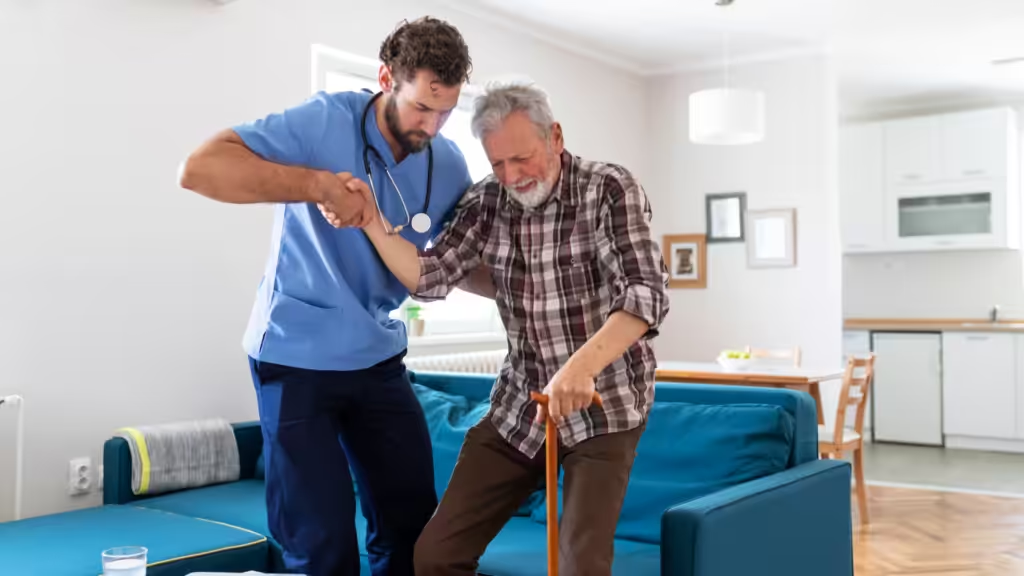
How to Look for Danger Signs of Malnutrition and Dehydration in Sarasota, FL and the Surrounding Areas Malnutrition and dehydration to elderly person can lead to many serious health problems. For elderly care malnutrition is costly while dehydration can be fatal. RIGHT ACCORD Home Health Care is dedicated to helping individuals live safely and comfortably […]
Read More from Danger Signs of Malnutrition and Dehydration Among Elderly in Sarasota, FL

Understanding Legal Guardianship and Social Security in Sarasota, FL and the Surrounding Areas Becoming a legal guardian doesn’t automatically mean you can manage a loved one’s Social Security. Here’s how to navigate the Representative Payee process with confidence and care. RIGHT ACCORD Home Health Care is dedicated to helping individuals live safely and comfortably at […]
Read More from Legal Guardianship and Social Security: What You Need to Know