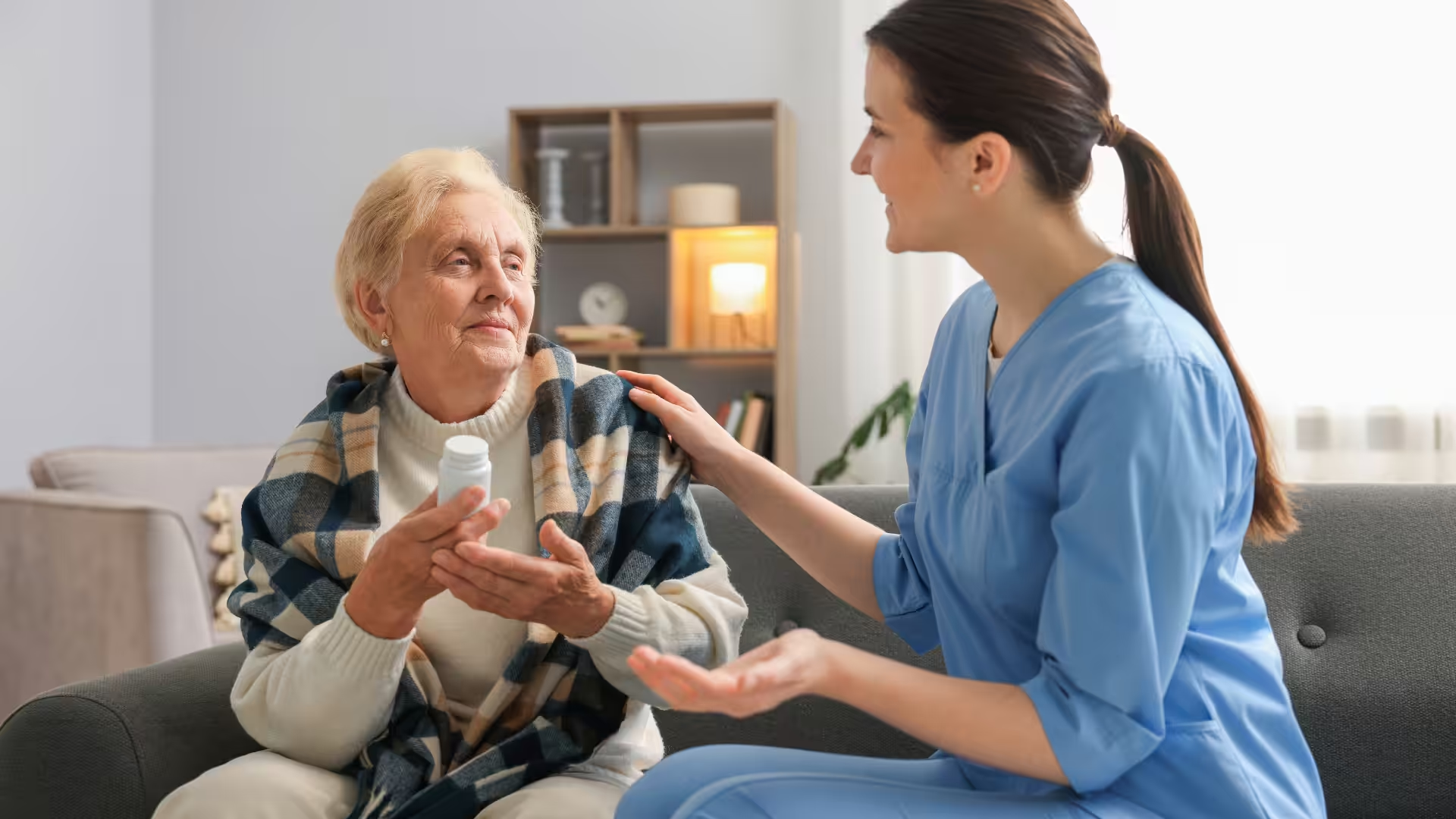
7 Transitional Care Strategies From Hospital To Home Recovery in Sarasota, FL
Transitional Care Tips in Sarasota, FL and the Surrounding Areas
Transitional Care is a term where patient is discharged entirely from the hospital to return home. Here’s our exclusive tips on Transitional Care for elderly.
RIGHT ACCORD Home Health Care is dedicated to helping individuals live safely and comfortably at home with personalized care tailored to their unique needs. Call us today at 941-366-0801 or contact us online to schedule a consultation and learn how we can support you or your loved one.
Aging is associated with an increased prevalence of age-related diseases. As a matter of fact, 1 in 5 of the elderly population will not only have to deal with just one health concern, but at least 5 at a time.
As an elderly person who is being managed in a hospital or a health care facility for any of these health conditions, a time will come when it will be considered safe enough to let you return home.
Being certified healthy enough to go back home may not be the end of it however. Does going back home mean you are completely out of the woods? The line of transitional care is not really as wide as we would want to think. The line is quite thin and there could still be some danger lurking around if things go wrong, leading to a possible re-admission.
Within a 30 day period of being discharged from a health center, 1 in 5 people will return and get readmitted. When that waiting period is extended to 90 days, the number of returnees go up to 1 in 3.
Why is this of major concern? Asides the mortal risks it poses to the patient, there is also a financial burden that these re-admissions put on Medicare. As 75% of people who enjoy Medicare are of the elderly population, an extra 17 billion dollars is expended in catering for readmission cases.
There are ways to curtail and shrink these numbers and it is also possible to eliminate some of the avoidable reasons why people have to be readmitted. But first let us grasp the concept of transitional care.
What is transitional care?
During the course of managing a patient for a healthcare condition, the treatment plan can be in different stages whereby the person would have to be moved either from one setting to another within the hospital premise.
For example from the intensive care unit to the outpatient department or they could be discharged entirely from the hospital to return home. Patient handover is an important factor in transitional care and this involves the transfer of patient information, appropriate communication between the managing healthcare staff as well as transfer of the responsibility of care to the caregivers at home during discharge.
The transition from hospital to home requires as much attention as transitions within the hospital. Here are some of the strategies that could be of help as you make that journey.
1. Be Clear on Instructions and When in Doubt, Always Ask Questions
It was found out that 1 in 5 patients later claim that certain information about their care was not given to them . In these cases, the patients had to return to the hospitals as a result of some relapse or complications from their previous management, resulting from their failure to follow after care instructions given to them .
To prevent this, ensure to clear every gray area in the instructions given and do not fill in the blanks in the information by yourself. When in doubt, ask, ask and ask again.
2. Ensure That Your Caregiver Is Carried Along for Your Appointments
The over 60 million caregivers in the United States have a role to play in the recovery process of the people they take care of at home. Because of the emotional distractions that may come with certain health conditions, it is unsurprising perhaps that many patients miss out on vital information they would require as they transition in their care. In fact, you are very much likely going to forget 40-80% of the information and instructions given to you.
It is best therefore that there is a third party around when it is being given. Importantly, it should be someone who will be involved in your home care. Since they are, so to speak, detached from the case, they will retain more of this information with no emotional clouds in the way.
3. Be Informed About Your Medication
The chances are that there will be prescription medicines provided for you as you leave the hospital. 82% of adult Americans need or take prescription medication but on the contrary, not that much proportion know all they need to about their prescriptions.
Many medications have contraindications and some also may interact with other medications if taken together. These are some of the information you should be armed with when leaving the hospital as any error in adhering to them could have you back in the hospital, if not even leading to a very serious or even fatal outcome.
4. Follow-Up Appointments Are Key
Being out of the hospital does not necessarily translate to being 100% fit and healthy. It could be (and most times is), to ease the financial burden of health, to reintegrate one early back into their quality of life and reduce any risks of falling sick from other causes. When this is the case and a follow up appointment is given, always ensure to meet up.
One major benefit of follow up appointments is that complications resulting from the health condition perhaps as a consequence of non-adherence to instructions or a stoppage of prescription use would be caught earlier, thereby preventing cases of readmission. 55% of patients will not return for their appointments after being discharged and this should not be so.
5. Home Visits and Calls
Having regular follow up calls or even visits from a professional healthcare provider is also important to the recovery process and the prevention of readmissions.
In certain cases, the appointments schedule is the other way round and the patient does not necessarily have to visit the healthcare center. Rather, the health profession makes visiting rounds or calls to check up on the patient and monitor their recovery.
This stage of transitional care is so important that up to 23% of adherent patients will end up not having to be readmitted into a hospital within the first 30 days of their being discharged.
6. Living Condition at Home
As the transition in care ensues, it is important to know that where you are returning to is also as important in your recovery process as where you were managed. Ensure that the conditions at home are favorable to your recovery journey.
Certain rearrangements may have to be considered. Bedrooms for instance, could be relocated downstairs if climbing is a difficulty for the recovering person. Good lighting is also necessary for patients with visual impediments. For those with memory loss, places and things can be labeled clearly to aid memory and a myriad of other changes that can be implemented at home to assist this process.
7. Family Involvement
The love and support that family members can give during this transitioning can go a long way in aiding recovery.
Family members can play multiple roles by helping out with chores, providing company and even being the first responders in cases of emergencies, making the necessary calls and appointments should the sick person become incapacitated to do so.
Takeaway
There are also other factors that may be beyond the control of the patient but are equally vital in their transitional care. For one, the availability of community resources like rehabilitation centers can be beneficial. Also, proximity to the health facility could be another reason why many patients choose to give up on their appointments.
It is indeed a good feeling to finally get to leave the hospital after days or months on end of being hospitalized and to return home to all the familiar places and people you have missed while you were away. But it is better to ensure that you do not have to return to the hospital especially because of an avoidable reason that you could have prevented. These tips might just save your time, funds and even life!
RIGHT ACCORD Home Health Care is dedicated to helping individuals live safely and comfortably at home with personalized care tailored to their unique needs. Call us today at 941-366-0801 or contact us online to schedule a consultation and learn how we can support you or your loved one.
Aging is a Privilege in Sarasota, Venice, Lakewood Beach, FL and the Surrounding Areas Explore why aging should be celebrated, not feared. Learn how aging reflects wisdom, resilience, and opportunity—and how RIGHT ACCORD supports it with compassionate care. RIGHT ACCORD Home Health Care is dedicated to helping individuals live safely and comfortably at home with […]
Read More from Aging Is a Privilege: Celebrating Life, Wisdom, and Growing Older in Sarasota, FL
Transitional Care Tips in Sarasota, FL and the Surrounding Areas Transitional Care is a term where patient is discharged entirely from the hospital to return home. Here’s our exclusive tips on Transitional Care for elderly. RIGHT ACCORD Home Health Care is dedicated to helping individuals live safely and comfortably at home with personalized care tailored […]
Read More from 7 Transitional Care Strategies From Hospital To Home Recovery in Sarasota, FL

The Elderly Caregiver Shortage in Sarasota, FL Caregivers are an integral part on the lives of the elderly in the US. Seeing a caregiver shortage in the country strikes an alarm and needs full attention. RIGHT ACCORD Home Health Care is dedicated to helping individuals live safely and comfortably at home with personalized care tailored […]
Read More from What Causes Elderly Caregiver Shortage and How to Solve It in Sarasota, FL?

The Statistics Surrounding Caregiving Stress and Burnout in Sarasota, FL and Nearby Areas Caregiving Stress And Burnout is at alarming stage based on new statistics. This signals a need for a drastic action to help caregivers overcome these challenges. RIGHT ACCORD Home Health Care is dedicated to helping individuals live safely and comfortably at home […]
Read More from The Alarming Statistics About Caregiving Stress And Burnout in Sarasota, FL
How to Look for Danger Signs of Malnutrition and Dehydration in Sarasota, FL and the Surrounding Areas Malnutrition and dehydration to elderly person can lead to many serious health problems. For elderly care malnutrition is costly while dehydration can be fatal. RIGHT ACCORD Home Health Care is dedicated to helping individuals live safely and comfortably […]
Read More from Danger Signs of Malnutrition and Dehydration Among Elderly in Sarasota, FL

Understanding Legal Guardianship and Social Security in Sarasota, FL and the Surrounding Areas Becoming a legal guardian doesn’t automatically mean you can manage a loved one’s Social Security. Here’s how to navigate the Representative Payee process with confidence and care. RIGHT ACCORD Home Health Care is dedicated to helping individuals live safely and comfortably at […]
Read More from Legal Guardianship and Social Security: What You Need to Know