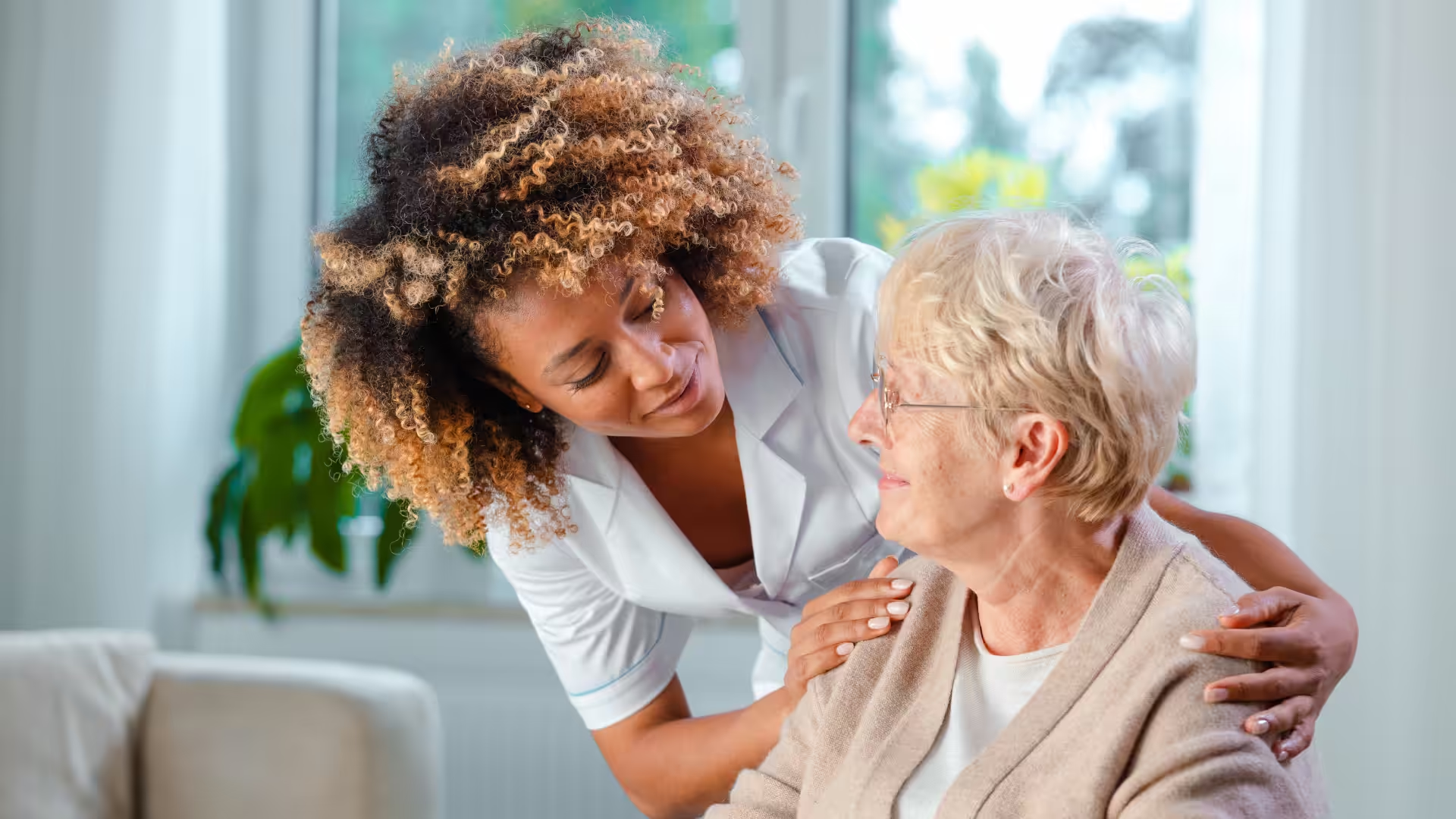
The Caregivers Essential Guide to First Aid Basics in Sarasota, FL
Essential Guide to First Aid Basics for Caregivers in Sarasota, FL and the Surrounding Area
This guide will help Caregivers gain the right knowledge and skills about first aid and help them provide the best possible care for their loved ones.
RIGHT ACCORD Home Health Care is dedicated to helping individuals live safely and comfortably at home with personalized care tailored to their unique needs. Call us today at 941-366-0801 or contact us online to schedule a consultation and learn how we can support you or your loved one.
Taking care of someone else is a big responsibility, and the ability to provide basic first aid is an essential skill for any carer.
Whether you are caring for a child, an elderly person, or someone with a disability, you need to ensure that you are prepared to respond to any medical emergency that may arise. The Carer’s Essential Guide to First Aid: Mastering the Basics is designed to provide carers with an understanding of the basics of first aid, so that they can be confident they can respond quickly and effectively in any emergency situation.
With clear, concise instructions and helpful illustrations, this guide will give caregivers the knowledge and confidence to provide basic first aid in any situation.
The Basics of First Aid
First aid is the initial care given to a person who has been injured or becomes ill. It is the first step in the chain of survival and can make a big difference in the outcome of an emergency situation.
The basics of first aid include assessing the situation, calling for help if necessary, and providing care until medical professionals arrive.
When assessing the situation, the first step is to ensure your safety and that of the person you are caring for. Then, assess the person’s condition by checking their breathing, pulse, and level of consciousness. From there, you can determine the appropriate course of action.
One of the most important aspects of first aid is knowing when not to move the person. If they have a suspected neck or spinal injury, moving them could make the injury worse. It’s important to keep the person still until medical help arrives.
In addition to assessing the situation, it’s essential to have a basic understanding of the human body and its functions. This includes knowing the location of vital organs and understanding the symptoms of common medical emergencies, such as heart attacks and strokes.
Common First Aid Procedures
There are many different first aid procedures that a carer should be familiar with. These include:
CPR
Cardiopulmonary resuscitation (CPR) is a life-saving technique used in cases where a person’s heart has stopped beating. It involves chest compressions and rescue breaths to keep oxygen flowing to the brain and other vital organs.
Choking
Choking occurs when a person’s airway becomes blocked. The Heimlich maneuver is a first aid technique used to dislodge the obstruction and restore breathing.
Bleeding
In cases of severe bleeding, immediate action is needed. Applying pressure to the wound and elevating the affected limb can help to slow the bleeding until medical help arrives.
Burns
Burns can be caused by heat, chemicals, electricity, or radiation. The severity of the burn will determine the appropriate first aid treatment, which may include cooling the affected area and covering it with a sterile dressing.
Fractures
A fracture is a broken bone. If you suspect a fracture, immobilize the affected limb and seek medical help immediately.
Knowing When to Call an Ambulance
While it’s important to have a basic understanding of first aid, it’s equally important to know when to call for professional medical help. In general, you should call an ambulance if:
- The person is unconscious or unresponsive
- The person is experiencing chest pain or difficulty breathing
- The person has severe bleeding
- The person has a suspected spinal or neck injury
- The person has a suspected fracture
- The person is having a seizure
If in doubt, it’s always better to err on the side of caution and call for help. It’s better to have medical professionals arrive and determine that the situation is not serious than to delay calling for help and risk the person’s health.
Safety Tips for Carers
In addition to knowing basic first aid, carers should also take steps to ensure their own safety. This includes:
- Ensuring that the environment is free of hazards, such as loose rugs or electrical cords
- Using proper lifting techniques to avoid back injuries
- Wearing gloves and other protective gear when handling bodily fluids or other potentially hazardous materials
- Taking breaks and getting enough rest to avoid burnout and fatigue
- Seeking help from other carers or medical professionals when needed
How to Administer CPR
Cardiopulmonary resuscitation (CPR) is a life-saving technique that can be used to keep a person alive until medical help arrives. To perform CPR, follow these steps:
1. Call for help
If you are alone, call for help before starting CPR.
2. Check for responsiveness
Tap the person’s shoulder and shout their name to see if they respond.
3. Check for breathing
Look, listen, and feel for breathing for no more than 10 seconds.
4. Start chest compressions
Place the heel of one hand on the center of the person’s chest and the other hand on top. Press down hard and fast, aiming for a rate of 100-120 compressions per minute.
5. Give rescue breaths
Tilt the person’s head back and lift their chin. Pinch their nose shut and give two rescue breaths.
6. Repeat
Continue performing chest compressions and rescue breaths until medical help arrives or the person begins to breathe on their own.
First Aid Kits and Supplies
Having a well-stocked first aid kit is essential for any carer. A basic first aid kit should include:
- Adhesive bandages in various sizes
- Sterile gauze pads
- Medical tape
- Antiseptic wipes or solution
- Disposable gloves
- Tweezers
- Scissors
- Instant cold packs
- Thermometer
- Pain-relieving medication
- Prescription medications (if applicable)
It’s important to check the first aid kit regularly to ensure that supplies are not expired or missing. In addition to a first aid kit, carers should also have easy access to emergency phone numbers and a list of the person’s medical conditions and medications.
Dealing with Burns and Cuts
Burns and cuts are common injuries that can occur in any household. To treat burns, follow these steps:
1. Remove the source of the burn
If the burn is caused by heat or a chemical, remove the person from the source of the burn.
2. Cool the affected area
Hold the burned area under cool, running water for at least 10 minutes.
3. Cover the burn
Cover the burn with a sterile, non-adhesive dressing.
4. Treat for pain
Over-the-counter pain medication can help to relieve pain and reduce inflammation.
To treat cuts, follow these steps:
1. Stop the bleeding
Apply pressure to the cut with a clean cloth or bandage.
2. Clean the wound
Clean the wound with soap and water, being careful not to scrub too hard.
3. Cover the wound
Cover the wound with a sterile dressing or bandage.
4. Monitor for signs of infection
If the wound becomes red, swollen, or pus-filled, seek medical help.
Carers and Mental Health First Aid
In addition to physical first aid, carers should also be aware of the signs of mental health problems and how to provide support. Mental health first aid involves providing initial support to someone who may be experiencing a mental health crisis or who is developing a mental health problem. This may include listening, offering reassurance, and helping the person to access professional help.
Some signs that a person may be experiencing a mental health problem include:
- Changes in mood or behavior
- Withdrawing from social activities
- Increased use of drugs or alcohol
- Difficulty sleeping or eating
- Excessive worry or anxiety
If you suspect that the person you are caring for may be experiencing a mental health problem, it’s important to offer support and encourage them to seek professional help.
Conclusion
Being a carer is a big responsibility, but with the right knowledge and skills, you can provide effective care and respond to emergencies with confidence. By mastering the basics of first aid, knowing when to call for professional help, and taking steps to ensure your own safety, you can provide the best possible care for the person you are looking after.
Remember, first aid is the first step in the chain of survival, and your actions can make a big difference in the outcome of an emergency situation.
RIGHT ACCORD Home Health Care is dedicated to helping individuals live safely and comfortably at home with personalized care tailored to their unique needs. Call us today at 941-366-0801 or contact us online to schedule a consultation and learn how we can support you or your loved one.
Aging is a Privilege in Sarasota, Venice, Lakewood Beach, FL and the Surrounding Areas Explore why aging should be celebrated, not feared. Learn how aging reflects wisdom, resilience, and opportunity—and how RIGHT ACCORD supports it with compassionate care. RIGHT ACCORD Home Health Care is dedicated to helping individuals live safely and comfortably at home with […]
Read More from Aging Is a Privilege: Celebrating Life, Wisdom, and Growing Older in Sarasota, FL
Transitional Care Tips in Sarasota, FL and the Surrounding Areas Transitional Care is a term where patient is discharged entirely from the hospital to return home. Here’s our exclusive tips on Transitional Care for elderly. RIGHT ACCORD Home Health Care is dedicated to helping individuals live safely and comfortably at home with personalized care tailored […]
Read More from 7 Transitional Care Strategies From Hospital To Home Recovery in Sarasota, FL
The Elderly Caregiver Shortage in Sarasota, FL Caregivers are an integral part on the lives of the elderly in the US. Seeing a caregiver shortage in the country strikes an alarm and needs full attention. RIGHT ACCORD Home Health Care is dedicated to helping individuals live safely and comfortably at home with personalized care tailored […]
Read More from What Causes Elderly Caregiver Shortage and How to Solve It in Sarasota, FL?
The Statistics Surrounding Caregiving Stress and Burnout in Sarasota, FL and Nearby Areas Caregiving Stress And Burnout is at alarming stage based on new statistics. This signals a need for a drastic action to help caregivers overcome these challenges. RIGHT ACCORD Home Health Care is dedicated to helping individuals live safely and comfortably at home […]
Read More from The Alarming Statistics About Caregiving Stress And Burnout in Sarasota, FL
How to Look for Danger Signs of Malnutrition and Dehydration in Sarasota, FL and the Surrounding Areas Malnutrition and dehydration to elderly person can lead to many serious health problems. For elderly care malnutrition is costly while dehydration can be fatal. RIGHT ACCORD Home Health Care is dedicated to helping individuals live safely and comfortably […]
Read More from Danger Signs of Malnutrition and Dehydration Among Elderly in Sarasota, FL

Understanding Legal Guardianship and Social Security in Sarasota, FL and the Surrounding Areas Becoming a legal guardian doesn’t automatically mean you can manage a loved one’s Social Security. Here’s how to navigate the Representative Payee process with confidence and care. RIGHT ACCORD Home Health Care is dedicated to helping individuals live safely and comfortably at […]
Read More from Legal Guardianship and Social Security: What You Need to Know